
ANTS
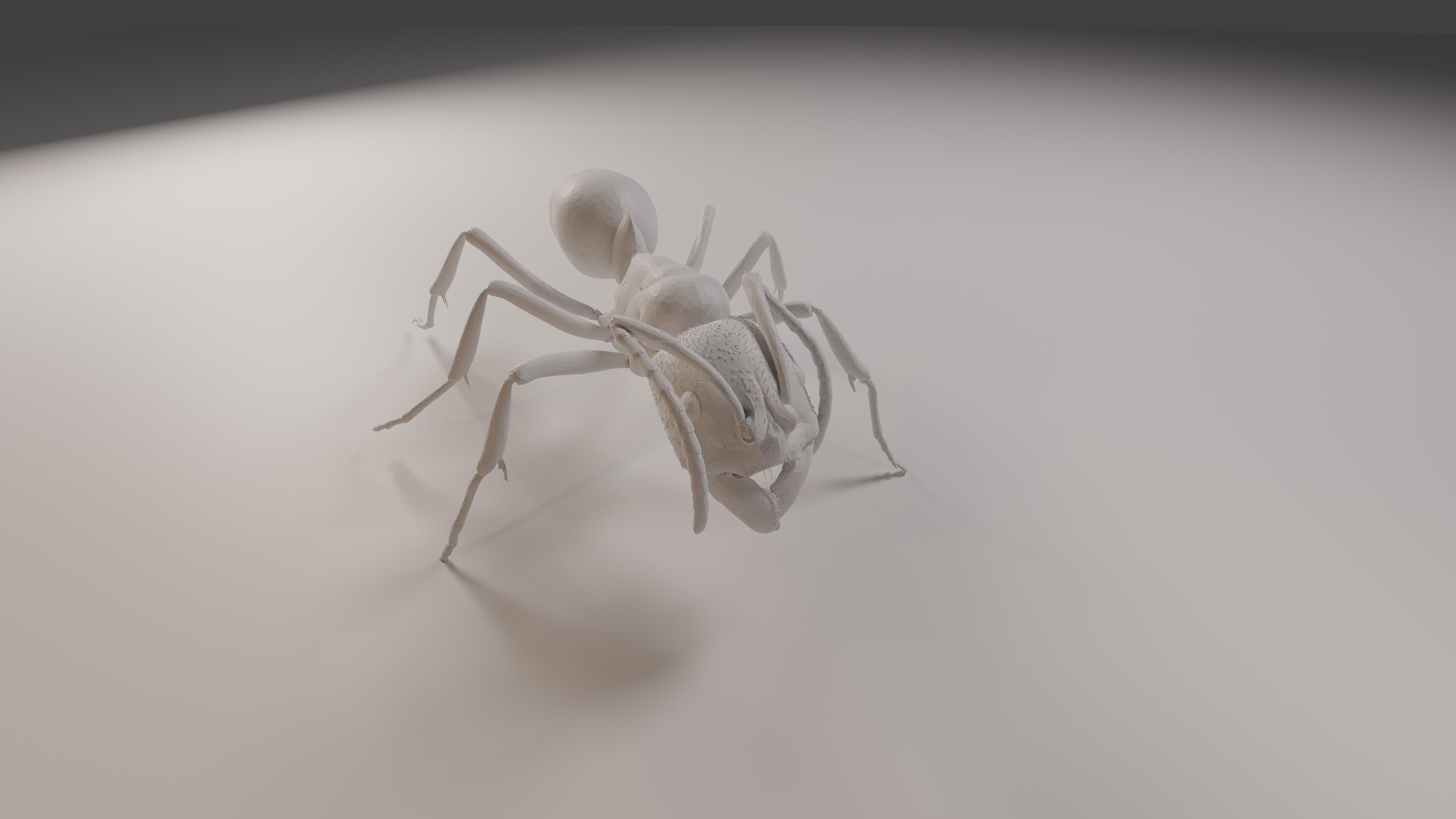
Geometry-based research pipeline that converts static ant meshes from Micro-CT scans into rigged, poseable 3D models. The project also includes an interactive website for exploring the pipeline, previewing specimen outputs, and showcasing the final results.
Core Features
Geometry-Based Pipeline
- • Converts static STL ant meshes into rigged, poseable Blender assets
- • Extracts centerline skeletons from mesh geometry with CGAL mean curvature flow
- • Labels body and leg branches using thickness, connectivity, and anatomy-driven heuristics
- • Solves for joint placement along body and legs with curvature and spacing signals
- • Reposes completed rigs into a natural standing position automatically
Interactive Deliverables
- • Browser-based pipeline walkthrough from raw mesh to final posed specimen
- • Interactive 3D model viewer with multiple specimen examples
- • AR-ready viewer experience on supported devices
- • Public-facing website to present the research and outputs clearly
- • Intermediate artifacts and previews for debugging and validation
Technical Stack
Pipeline Engine
- • Python orchestration across preprocessing, skeletonization, rigging, and posing stages
- • CGAL C++ helper for high-quality skeleton extraction
- • Blender automation for rig construction, posing, STL export, and rendered previews
- • NumPy, SciPy, Trimesh, and Matplotlib for geometry processing and analysis
- • Modular stage contracts with machine-readable outputs for reruns and debugging
Website & Visualization
- • React and Vite frontend for the public project website
- • Three.js with React Three Fiber and Drei for interactive 3D presentation
- • Responsive demo pages for pipeline exploration and specimen viewing
- • Asset preloading and structured content modules for maintainability
- • Coverage links and project context integrated into the site experience
Validation & Results
Measured Outcomes
- • End-to-end runtime of under 3 minutes for a new specimen on the final pipeline
- • 42 out of 50 curated clean specimens completed the full rigging pipeline
- • 32 posed outputs were qualitatively successful after manual review
- • 84% rigging success rate on curated meshes without erroneous connections
- • Research focus on scaling articulation across AntScan's large specimen collection
Pipeline Outputs
- • Rigged Blender files ready for articulation and inspection
- • Posed STL exports for visualization and downstream usage
- • Skeleton, segmentation, and review artifacts for each stage
- • Run summaries with per-stage timing and failure categorization
- • Validation workflow built around inspectable intermediate results
Research Challenges
The main blocker for broader deployment is handling erroneous mesh connections such as fused legs or body contacts in the source models. The strongest future directions are improving CT-to-mesh segmentation upstream or making preprocessing more robust at removing bad connections without damaging valid anatomy.